
Modernization Roadmap 2026: Consolidation, Cloud, and Choosing the Right Talent Partner
![[HERO] Modernization Roadmap 2026: Consolidation, Cloud, and Choosing the Right Talent Partner](https://cdn.marblism.com/6-fGB147Ks2.webp)
Federal agencies and commercial enterprises face a critical decision point in 2026: invest scarce budget dollars into data center consolidation, pursue full cloud migration, or find a strategic middle path. We’ve helped organizations navigate this exact crossroads for over two decades, and the answer isn’t one-size-fits-all.
The bigger question most leadership teams overlook? Whether you need IT staffing services or technology consulting to execute your modernization roadmap. Get this decision wrong, and you’ll burn through budget without meaningful progress. Get it right, and you’ll see 25-35% cost reclamation and 40-60% faster deployments.
Data Center Consolidation vs. Cloud Migration: The 2026 Budget Reality
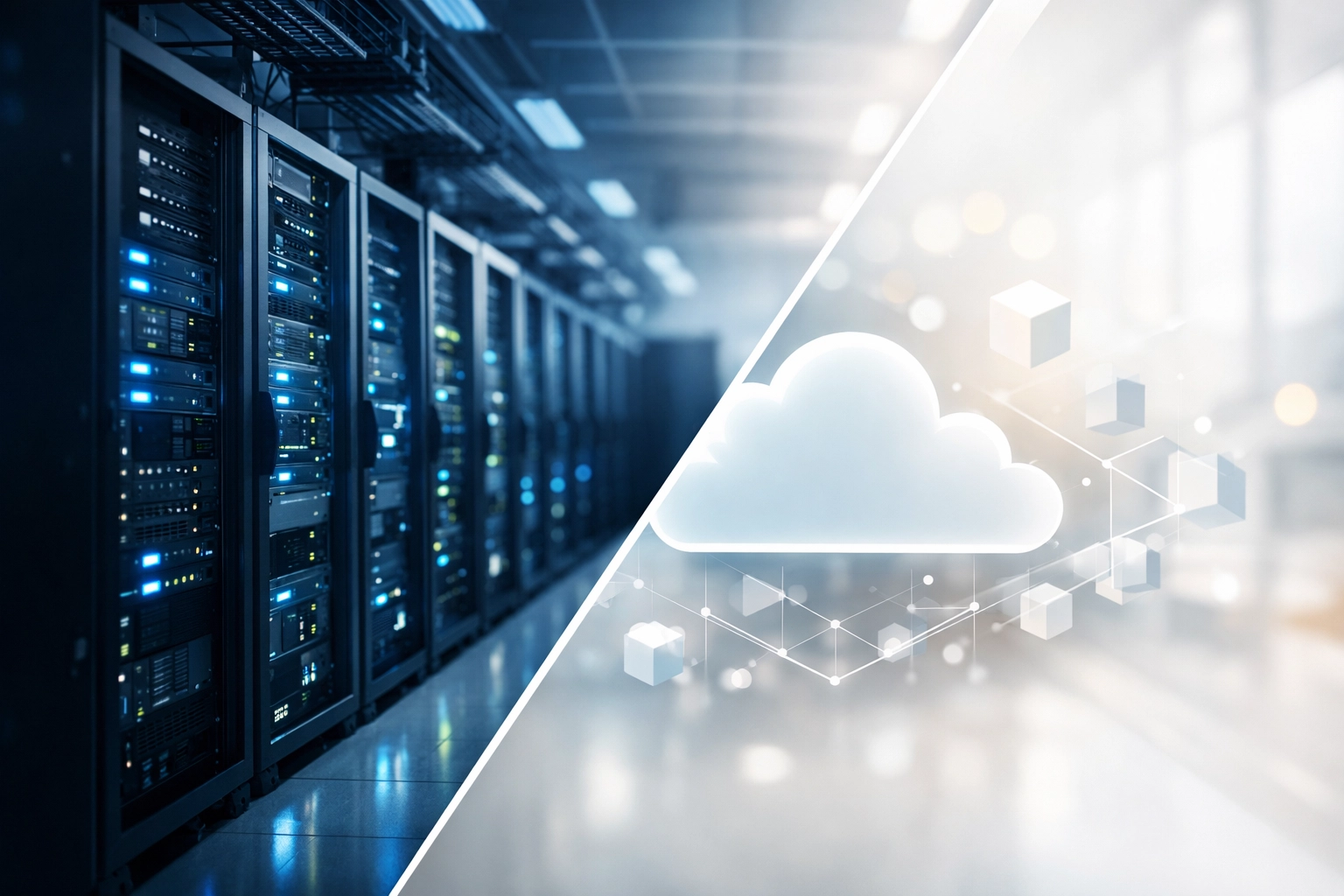
Let’s cut through the noise. Data center consolidation made sense when your primary goal was reducing physical footprint and lowering facilities costs. Cloud migration promised unlimited scalability and elimination of capital expenses. Both approaches have merit, but the 2026 landscape demands a more nuanced strategy.
Data center consolidation still delivers value for organizations with:
- Highly regulated workloads requiring air-gapped environments
- Applications with strict data sovereignty requirements
- Legacy systems too complex or risky to migrate immediately
- Existing infrastructure investments not yet fully depreciated
Budget-wise, consolidation typically requires 30-40% upfront capital investment but delivers predictable operational costs. You’re optimizing what you own rather than shifting to an operational expense model.
Cloud migration makes financial sense when:
- Your workloads experience variable demand requiring elastic scaling
- You’re drowning in maintenance overhead from aging infrastructure
- Your team needs faster deployment velocity for competitive advantage
- You want to eliminate data center facilities costs entirely
The cloud operates on a consumption-based model: you pay for what you use, which can mean 15-25% immediate savings through better utilization. However, without proper governance, cloud costs can spiral quickly.
Here’s what we’ve learned working with both federal agencies and commercial clients: the smartest 2026 strategy is hybrid. Keep your most sensitive workloads on-premises or in compliant government cloud environments, while migrating everything else to public cloud for agility and cost optimization.
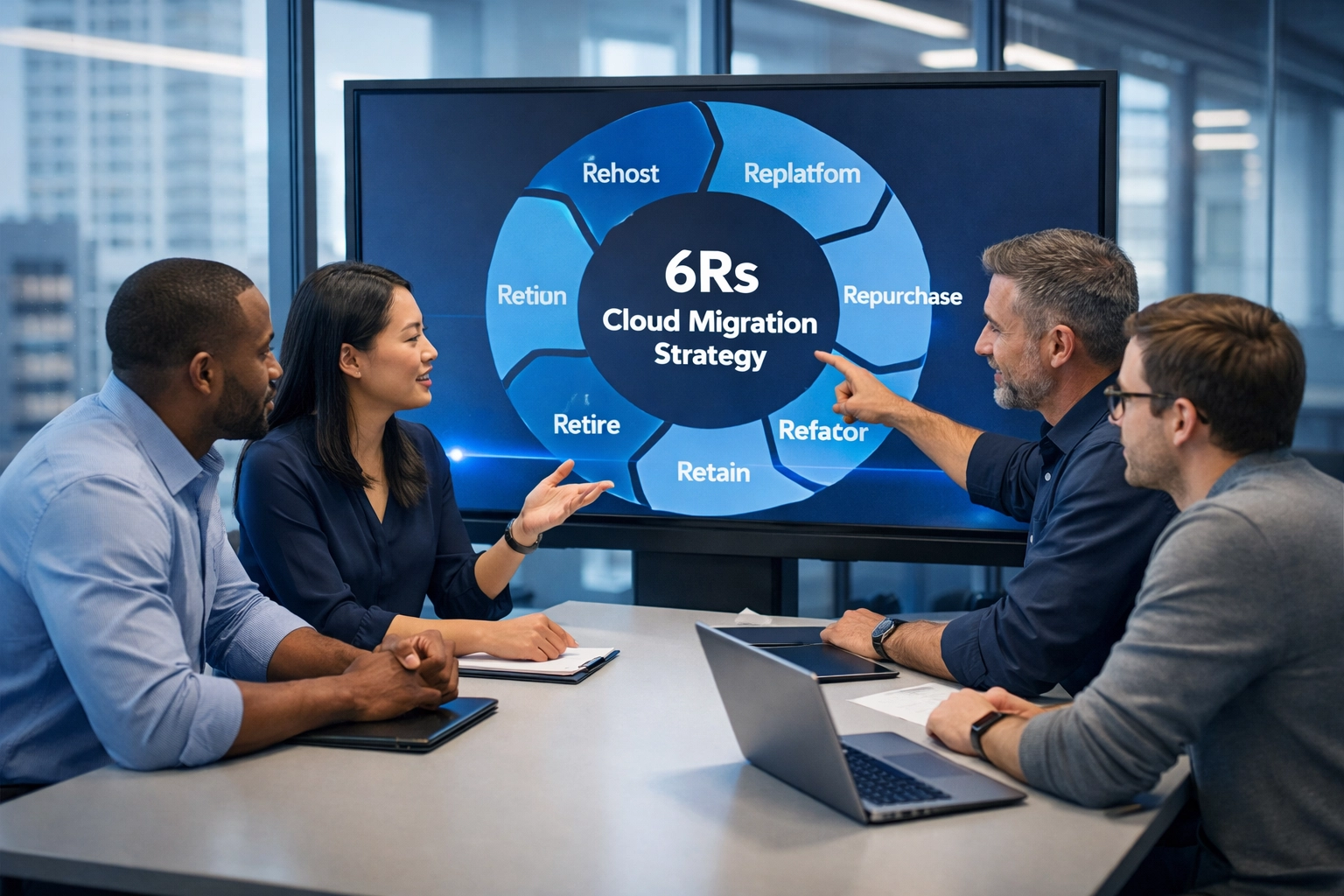
The 6Rs Framework: Your Consolidation and Migration Blueprint
We empathize with the obstacles you encounter because we’ve been in your shoes. Twenty years of technology consulting has taught us that success requires a structured approach. The 6Rs framework prevents the costly mistake of “moving your mess to the cloud.”
Retire applications that no longer provide business value. We recently helped a federal agency identify 23 redundant systems consuming $1.2M annually. Decommissioning them freed budget for actual modernization.
Retain high-security or heavily regulated workloads on-premises while building compliant cloud alternatives. This phased approach maintains security posture while gradually increasing cloud adoption.
Rehost (lift and shift) moves virtual machines to cloud infrastructure with minimal changes. This delivers quick wins: typically 15-25% cost savings: while buying time for deeper modernization.
Replatform modernizes web applications to containers or platform-as-a-service. We’ve seen clients reduce maintenance overhead by 60% while enabling auto-scaling capabilities they couldn’t achieve on-premises.
Refactor rewrites core customer-facing systems into microservices for maximum agility. This is the most expensive path but delivers the highest long-term value for revenue-generating applications.
Replace swaps custom-built legacy tools for modern SaaS solutions. Why maintain a homegrown help desk system when ServiceNow or Jira offer superior features at lower total cost?
IT Staffing Services vs. Technology Consulting: When to Use Which
This distinction trips up more organizations than any technical challenge. Both services address talent gaps, but they solve fundamentally different problems.
Use IT staffing services when you:
- Have a clearly defined project scope and technical requirements
- Need specific skills for a defined time period
- Want direct management control over day-to-day activities
- Already have project methodology and governance in place
- Need to scale your existing team quickly without increasing headcount
Staffing provides skilled professionals who integrate into your team structure. You tell them what to do, and they execute under your direction. This works brilliantly for well-defined initiatives like migrating 50 servers to AWS or implementing a new telephony system where requirements are locked.
Use technology consulting when you:
- Don’t know the best approach to solve your problem
- Need strategic guidance on technology selection and architecture
- Want a partner to own project outcomes, not just provide labor
- Lack internal expertise to define requirements or manage execution
- Need someone who’s solved this exact problem dozens of times before
Consulting delivers both expertise and accountability. We bring proven methodologies, risk mitigation strategies, and vendor-agnostic recommendations based on what actually works in production environments.

Here’s a real example: A commercial client approached us thinking they needed three cloud engineers (staffing). After our discovery phase, we realized they actually needed cloud strategy consulting to redesign their architecture before adding headcount. We saved them six months of trial-and-error and $400K in wasted cloud spend.
Conversely, we’ve worked with federal agencies that had solid modernization plans but lacked the cleared personnel to execute. In those cases, our IT staffing services provided the right-fit talent to augment their teams without the overhead of technology consulting they didn’t need.
The Bluejacket Approach: Veteran Leadership Meets Technical Excellence
Our veteran leadership brings something most firms lack: mission-focused execution and accountability. We understand what it means to deliver under pressure, with limited resources, when failure isn’t an option. That military discipline translates directly to technology modernization projects where timelines are tight and budgets are constrained.
With over 20 years of experience serving both government and commercial clients, we’ve developed a three-phase modernization roadmap that consistently delivers results:
Phase 1: Foundation & Assessment (30-60 days) We conduct discovery on your most expensive or business-critical workloads and identify quick wins for immediate ROI. This isn’t theoretical analysis: we’re looking for opportunities to retire, consolidate, or rehost systems that will free up budget for deeper modernization.
Phase 2: Migrate and Replatform (3-9 months) We execute migrations in waves using the 6Rs framework. Our clients typically see 40-60% faster deployments through cloud-native architectures while maintaining security and compliance requirements.
Phase 3: Innovate and Optimize (9-18 months) We deploy intelligent automation, implement Infrastructure as Code, and integrate FinOps practices into your operations. This is where organizations achieve 25-35% cloud spend reclamation and position themselves for AI-ready infrastructure.

Throughout this journey, we’re flexible about whether you need our technology consulting services to guide strategy and execution, or our IT staffing services to augment your existing team with cleared, experienced professionals.
Building Your 2026 Modernization Budget
Let’s talk numbers. A typical mid-market organization with 200-500 users running 50-100 applications should budget:
- Data center consolidation path: $500K-$1.5M upfront capital investment, $200K-$400K annual operational costs
- Cloud migration path: $300K-$800K migration services, $400K-$800K annual cloud consumption
- Hybrid approach: $400K-$1M initial investment, $300K-$600K annual blended costs
Government agencies face additional compliance requirements that typically add 15-25% to these figures for FedRAMP authorization, security controls implementation, and continuous monitoring.
The key is matching your budget allocation to business outcomes, not technology trends. We help organizations frame modernization as risk mitigation plus revenue enablement through faster feature delivery and AI-powered capabilities.
Your Next Steps
If you’re wrestling with data center consolidation versus cloud migration decisions, or trying to determine whether you need staffing or consulting support, let’s connect. We provide vendor-agnostic recommendations based on your specific requirements, not what we’re trying to sell.
Our team brings the technical expertise and veteran leadership to help you navigate modernization complexity. We’ve seen what works, what fails, and what looks good in PowerPoint but falls apart in production. That experience is invaluable when your budget and career are on the line.
Visit our services page to learn more about our technology consulting and IT staffing capabilities, or contact us directly to discuss your 2026 modernization roadmap.
 The Bluejacket Brief: Field Tested Insights for Modern Government and Enterprise IT.