
![[HERO] The Shift in State IT: From Maintenance to Mission-First Excellence](https://cdn.marblism.com/tsp_yFAemKK.webp)
We’re witnessing a fundamental transformation in how state governments approach technology. For decades, the primary mandate for state IT departments was simple: keep the systems running. Maintain the infrastructure. Don’t let anything break. But that baseline expectation: what many leaders call “keeping the lights on”: is no longer enough.
Across the country, state CIOs are redefining their roles from back-office maintenance crews to strategic leaders driving mission outcomes. This shift isn’t just about adopting the latest technology or chasing digital transformation buzzwords. It’s about fundamentally rethinking how IT serves citizens, supports the workforce, and delivers on the core mission of government.
A recent leadership transition in Pennsylvania illustrates this evolution perfectly. When a state’s digital service leader steps into the CIO role, bringing years of user experience expertise with them, it signals something significant: user-centric design is no longer a nice-to-have. It’s now central to IT strategy.
From Maintenance Mode to Mission-First Leadership
Traditional state IT departments operated in what we call “defensive mode”: focused primarily on preventing failures, managing legacy systems, and responding to urgent requests. There’s nothing wrong with stability; in fact, it’s foundational. But when stability becomes the only goal, agencies miss opportunities to innovate, improve citizen services, and prepare for future challenges.
The new generation of state IT leadership recognizes that technology isn’t just about infrastructure: it’s about impact. We’re seeing CIOs ask different questions: How does this system improve the lives of our residents? Does this technology enable our workforce to be more effective? Are we building services that people actually want to use?
This mission-first approach requires a different mindset. It means thinking about IT not as a cost center but as a strategic enabler. It means measuring success not just by uptime percentages but by citizen satisfaction, service delivery speed, and workforce productivity.

User Experience as a Strategic Pillar
One of the most significant shifts we’re observing is the elevation of user experience from a peripheral concern to a core strategic priority. When tech leaders with backgrounds in digital services and UX design move into top IT roles, they bring a fundamentally different perspective on what government technology should accomplish.
Traditional government IT was often built from the inside out: designed around internal processes, compliance requirements, and administrative convenience. The result? Systems that work for the bureaucracy but frustrate the people trying to use them. We’ve all experienced clunky government websites, confusing application processes, and services that require in-person visits because the digital alternative is too complicated.
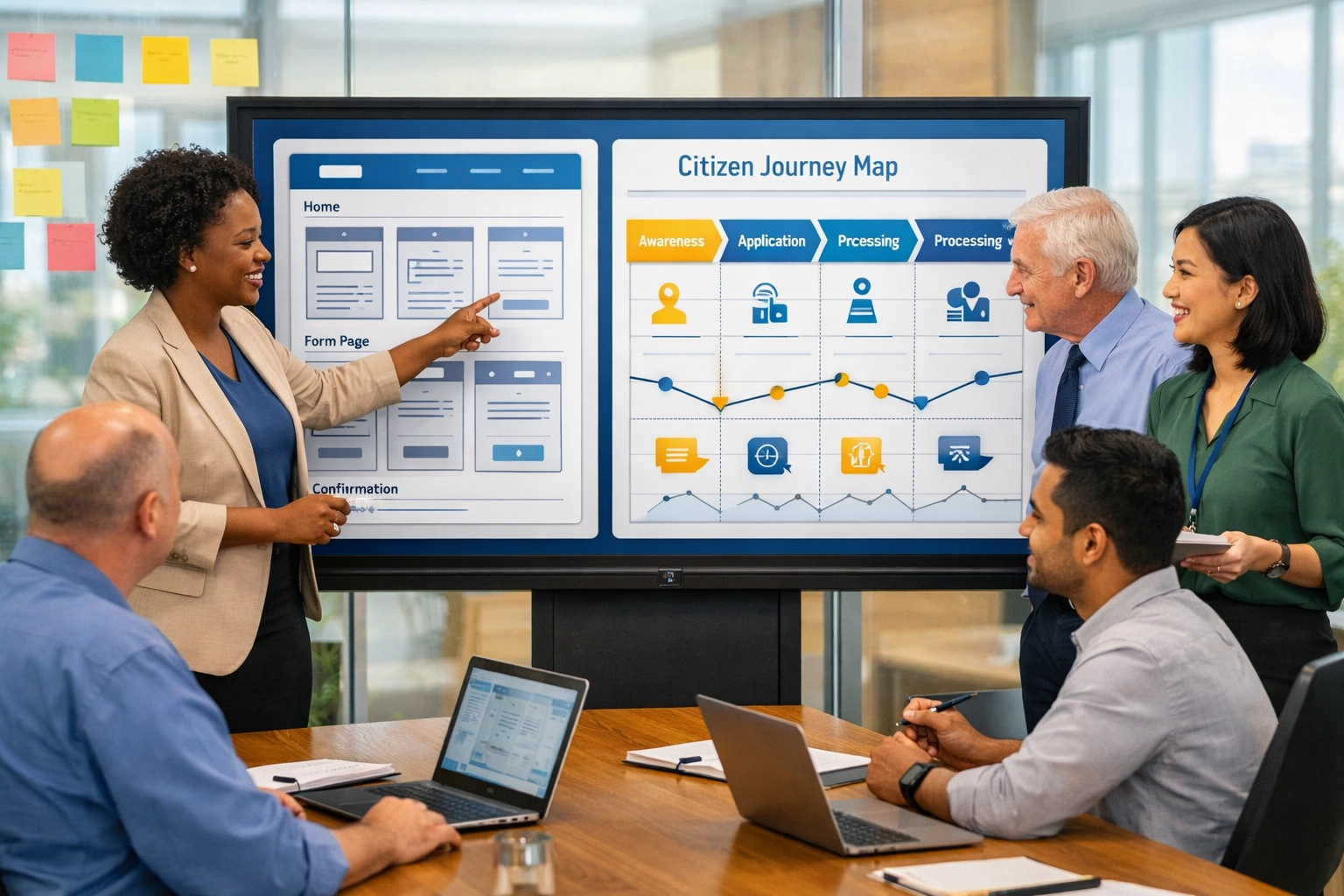
The user-centric approach flips this model. It starts with the citizen’s needs and works backward. What information are they trying to find? What service are they trying to access? What’s the simplest, most intuitive way to deliver that? This isn’t just about making things prettier: it’s about making government more accessible, more efficient, and more effective.
For state IT departments, adopting this mindset requires significant cultural change. It means involving actual users in the design process. It means iterating based on feedback rather than launching once and walking away. It means accepting that the first version won’t be perfect and building in continuous improvement.
Investing in Your Workforce: The Critical Foundation
Here’s a reality that doesn’t get discussed enough: technology changes faster than people can keep up. The skills that made someone an excellent IT professional five years ago may not fully prepare them for today’s challenges around cloud architecture, AI implementation, or modern cybersecurity threats.
Progressive state IT leaders are recognizing that workforce development isn’t optional: it’s essential. We’re seeing increased focus on training programs, upskilling initiatives, and creating career pathways that help existing staff adapt to new technologies rather than constantly trying to hire externally for every new skill gap.
This investment serves multiple purposes. First, it addresses the very real problem of recruitment and retention in government IT. When state salaries can’t compete with private sector offers, professional development becomes a critical retention tool. Second, it builds institutional knowledge. Your veteran team members understand the systems, the history, and the unique context of your agency. Training them on new technologies leverages that knowledge rather than starting from scratch with new hires.
Third, and perhaps most importantly, investing in your people sends a message about organizational values. It demonstrates that the agency views IT staff as strategic assets worth developing, not interchangeable resources to be managed.
AI and Data: From Pilots to Production
We’re at an inflection point with artificial intelligence in government. Federal agencies alone are now running over 1,100 active AI use cases: a remarkable ninefold increase in generative AI deployment in just one year. State governments are following a similar trajectory, but with an important evolution: moving from experimental pilots to operational deployment.
Many states have run AI pilots over the past few years. Some showed promise; others fell flat. The common denominator among successful implementations? They focused on specific, measurable outcomes rather than AI for its own sake.
Progressive states are now creating dedicated AI and data leadership positions: not as symbolic gestures but as operational necessities. These roles exist to manage the massive data resources state governments control and to identify opportunities where automation can meaningfully improve operations.
The most successful AI implementations we’re seeing focus on:
Automating Repetitive Work: Using AI to handle routine data entry, document processing, and initial citizen inquiries frees up staff for higher-value work requiring human judgment.
Decision Support: AI tools that help caseworkers, analysts, and administrators make more informed decisions by surfacing relevant information and identifying patterns.
Service Optimization: Using data analytics and machine learning to identify service bottlenecks, predict demand, and allocate resources more effectively.
The states making real progress with AI share a common understanding: the technology itself is less important than the data governance, workforce readiness, and strategic vision supporting it.

The Bluejacket Approach: Bridging Stability and Excellence
We’ve spent years helping government agencies navigate exactly this transition: from maintenance mode to mission-first excellence. Our perspective comes from understanding both worlds intimately. We know what it takes to keep critical systems stable and reliable. We also know what it takes to modernize infrastructure, adopt new technologies, and deliver services that citizens actually appreciate.
Here’s what we’ve learned: you can’t choose between back-end stability and front-end excellence. You need both. Keeping the train on the tracks matters tremendously: a system outage during a critical service window isn’t just inconvenient, it erodes public trust. But operating stable systems that deliver poor user experiences or fail to support mission outcomes isn’t success either.
The challenge many agencies face is resource constraints. IT budgets are tight. Staff is stretched thin. Major modernization projects compete with the daily demands of operations. This is where strategic government IT consulting makes a tangible difference.
We help agencies:
Assess Current State Realistically: Understanding where you are: your technical debt, your workforce capabilities, your most critical needs: is the foundation for everything else.
Prioritize Based on Mission Impact: Not every modernization initiative delivers equal value. We help identify the improvements that will most directly support your core mission and serve your stakeholders.
Build Roadmaps That Balance Quick Wins and Strategic Initiatives: You need some projects that deliver results quickly to build momentum and justify continued investment. You also need longer-term initiatives that fundamentally strengthen your infrastructure and capabilities.
Implement AI and IT Infrastructure Modernization Thoughtfully: Rushing to adopt new technology without proper planning, data governance, and workforce preparation typically leads to expensive failures. We’ve seen it too many times.
Develop Your People Alongside Your Technology: The most sophisticated technology stack won’t deliver results if your team doesn’t have the skills to leverage it effectively. Training and change management are as critical as technical implementation.
Our mission-first discipline: inherited from our veteran leadership: means we focus relentlessly on outcomes. We’re not interested in implementing technology because it’s trendy. We’re interested in helping you deliver better services, operate more efficiently, and fulfill your agency’s mission more effectively.
Looking Forward
The shift from maintenance to mission-first excellence isn’t a one-time transformation: it’s an ongoing evolution. The state IT leaders succeeding in this environment share several characteristics: they’re building user-centric cultures, investing in their workforce, treating major events as modernization opportunities, moving AI from pilots to production thoughtfully, and recognizing that stability and innovation aren’t opposites but complementary goals.
If your agency is navigating this transition, you’re not alone. We’ve helped government organizations at every level tackle these exact challenges. Whether you’re modernizing legacy infrastructure, implementing AI initiatives, strengthening cybersecurity, or simply trying to deliver better digital services to your constituents, we bring the experience and mission-first discipline to help you succeed.
Let’s connect to discuss how we can support your agency’s transition to mission-first IT excellence.
 The Bluejacket Brief: Field Tested Insights for Modern Government and Enterprise IT.
Leave a comment